
close
Choose Your Site
Global
Social Media
Views: 0 Author: Site Editor Publish Time: 2026-08-12 Origin: Site


Miscalculating refrigeration loads in food processing carries severe operational risks. Undersizing your system leads directly to product loss, accelerated bacterial growth, and critical compliance failures. Oversizing equipment drives up capital expenditures and inflates lifecycle energy consumption. The core problem lies in the complexity of fluctuating thermal loads within production environments. Static sizing models consistently fail because they ignore dynamic variables. Seasonal crop intake, hot washdown sanitation cycles, shift changes, and variable production rates constantly shift the thermal demand on your facility.
Mapping a precise load profile is an absolute necessity before evaluating any equipment. You must understand your facility's specific thermal demands to ensure operational stability. This technical guide helps you align those demands with the correct food processing refrigeration compressor technology and overall system architecture. By understanding the variables that dictate cooling requirements, you can design a system that maintains strict temperature thresholds while optimizing energy use.
Load Calculation is Multi-Variable: Accurate sizing requires calculating the sum of product heat (field/respiration), transmission heat, internal heat (machinery/people), infiltration heat, and transient sanitation loads.
Compressor-Condenser-Evaporator Balancing is Critical: System efficiency relies on matching compressor capacity with evaporator heat absorption and condenser heat rejection capacity under worst-case demands.
Compliance Drives Baseline Capacity: Systems must be designed to strictly maintain USDA/FDA mandated temperature thresholds (e.g., <40°F) regardless of external ambient spikes or production surges to halt pathogen development.
Accurate load calculation requires a comprehensive understanding of every heat source within your facility. Product load represents the thermal energy introduced by raw materials entering the space. Warm dairy or freshly harvested produce brings significant heat that must be removed quickly. You must differentiate between field heat, which is the initial temperature reduction required, and respiration heat. Fresh fruits and vegetables generate continuous heat through cellular respiration, adding a constant load to the system. For example, cooling 10,000 pounds of field-harvested strawberries from 80°F to 34°F requires massive immediate capacity compared to simply holding pre-cooled packaged goods.
Transmission or conduction load accounts for heat transfer through walls, roofs, and floors. Insulation R-values play a critical role in mitigating this transfer. Thermal bridging through structural steel or poorly insulated joints introduces unexpected heat. External ambient temperature spikes during summer months drastically increase the transmission load, forcing the system to work harder to maintain internal setpoints. Vapor barriers must remain intact; moisture migrating through compromised panel joints destroys insulation values and adds latent load.
Internal load encompasses the heat generated by everything operating within the refrigerated space. Processing equipment, conveyor motors, and packaging machinery emit substantial thermal energy. Forklift motors and high-intensity lighting add to this burden. Personnel working in the area also contribute sensible and latent heat, which must be factored into the overall calculation. A single 10-horsepower conveyor motor running continuously adds roughly 25,450 BTUs per hour to the space.
Infiltration and service load address the thermal and moisture impact of air exchange. Every time loading dock doors open, warm, moist air enters the facility. Conveyor openings and pedestrian traffic create continuous infiltration points. This introduces latent heat in the form of humidity, which forces evaporators to work harder and increases defrost cycles. Installing high-speed roll-up doors and air curtains mitigates this, but engineers must still calculate the air exchange rate based on door opening frequencies.
Sanitation and washdown loads introduce extreme, temporary thermal surges. Hot-water sanitation cycles flood the environment with high-humidity vapor. This creates extreme vapor pressure and heat that temporarily stress the refrigeration system. Failing to account for washdown loads often results in ceiling condensation and prolonged temperature recovery times. A typical washdown using 140°F water can temporarily triple the required cooling capacity for a specific room.
Engineering standards dictate sizing refrigeration systems for the worst-case scenario. This means calculating the peak summer ambient temperatures combined with maximum production throughput. You must also layer on the thermal surge from hot washdowns. Designing for peak demand ensures the facility never exceeds critical temperature thresholds during extreme conditions. If the ambient temperature hits 105°F during a heavy production run, the system must still hold the room at 34°F.
The operational reality differs significantly from peak design conditions. Refrigeration systems spend up to 90% of their lifecycle operating at partial loads. A system sized exclusively for peak demand will short-cycle if it cannot modulate its capacity. Capacity modulation and compressor staging become critical success criteria. The equipment must efficiently scale down its output during winter months or low-production shifts to prevent mechanical wear and wasted energy. Short-cycling destroys compressor contactors and leads to premature motor failure.
A compressor cannot operate in isolation. It acts as the heart of a larger, interconnected thermal management system. The compressor's suction and discharge pressures must perfectly align with the evaporator's cooling output. If the evaporator cannot absorb enough heat, the compressor will starve or experience liquid slugging. Liquid refrigerant returning to the compressor will wash oil off the cylinder walls and destroy the internal components.
The condenser must have the capacity to reject the heat absorbed by the evaporator, plus the heat of compression. If the condenser is undersized, discharge pressures will spike, reducing compressor efficiency and risking mechanical failure. High head pressure forces the compressor motor to draw excessive amperage, tripping breakers and shutting down production. System-wide balancing ensures that no single component becomes a bottleneck during peak load conditions.
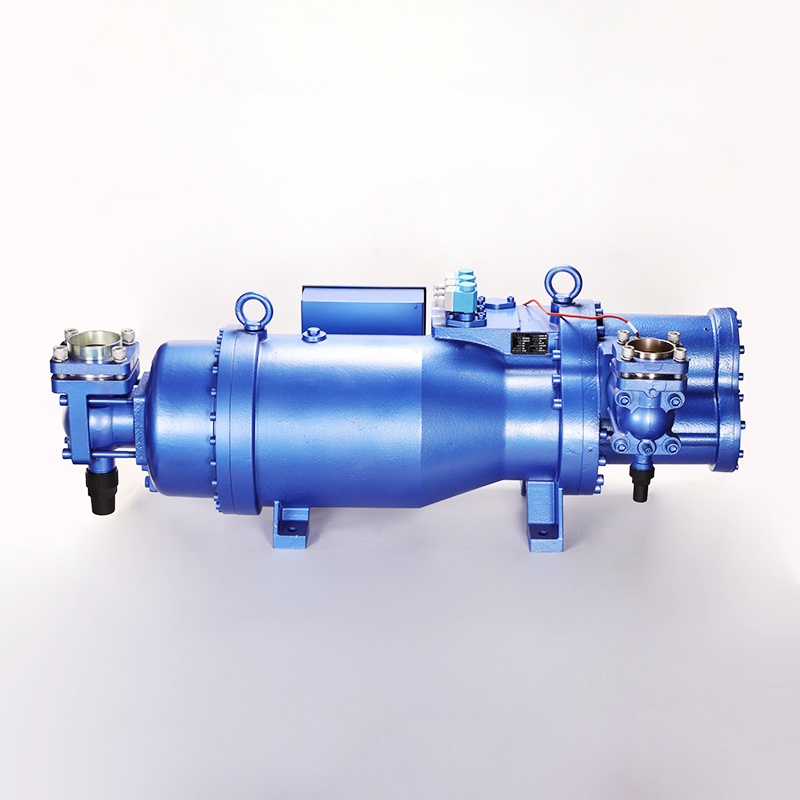
Large-scale processing plants require robust equipment capable of handling high continuous base loads. Meat processing facilities, IQF freezing tunnels, and industrial ice cream production rely heavily on the industrial screw compressor. This technology is engineered for massive volume and continuous operation. Twin helical rotors compress the refrigerant gas smoothly, eliminating the pulsation associated with reciprocating designs.
The performance profile of these compressors highlights durability and high volumetric efficiency. They offer long service intervals, making them ideal for facilities that cannot afford downtime. They are exceptionally well-suited for handling high-volume natural refrigerants like ammonia (NH3) or CO2, which are standard in large industrial applications. Oil management is critical here; screw compressors inject oil directly into the compression chamber for sealing and cooling, requiring robust oil separators downstream.
To maintain peak energy efficiency during part-load conditions, these compressors utilize specific modulation mechanisms. Slide valves physically alter the compression volume, allowing the machine to match the exact load requirement. Variable Frequency Drives (VFDs) adjust the motor speed, providing precise capacity control and significantly reducing power consumption when full output is unnecessary. Combining a VFD with a slide valve offers the widest and most efficient operating envelope.
Prep rooms, packaging areas, and holding coolers require consistent temperatures just above freezing. These environments typically operate between 28°F and 40°F. A medium temperature compressor unit is specifically designed to handle these specific thermal requirements efficiently. These units often utilize semi-hermetic reciprocating compressors, which provide excellent efficiency at medium suction pressures.
Parallel rack configurations offer superior flexibility for fluctuating loads. Multi-compressor parallel rack systems step individual compressors on and off to match the load profile. This staging is far more efficient than running a single large compressor at a fraction of its capacity. It provides built-in redundancy, ensuring that if one compressor fails, the others can maintain the temperature. A typical rack might have three or four compressors piped to a common suction header.
When integrating these systems, you must weigh specific trade-offs. Pre-assembled units offer a smaller floor-space footprint and faster installation speeds. Centralized plant architectures require more initial engineering and space but offer better long-term scalability for massive facilities. Piping runs from a centralized rack to distant evaporators must be carefully sized to ensure proper oil return and minimize pressure drop.
Many facilities require secondary coolant loops using glycol or water. Process cooling, jacketed mixing tanks, and precise environmental control in liquid food production depend on these loops. A water cooled refrigeration chiller provides the exact temperature control required for these sensitive applications. Pumping chilled glycol through a facility keeps the primary refrigerant charge isolated in the mechanical room.
Water-cooled systems offer superior heat transfer and thermodynamic efficiency compared to air-cooled alternatives. Water is a much better conductor of heat than air. This efficiency becomes particularly critical in high-ambient-temperature regions where air-cooled condensers struggle to reject heat effectively. Lower condensing temperatures directly translate to lower compressor power consumption.
Implementing these chillers requires critical support infrastructure. You must install and maintain cooling towers to dissipate the heat. Water treatment systems are mandatory to prevent scale buildup and biological growth within the condenser tubes. A consistent, high-quality water supply is essential for uninterrupted operation. Fouled condenser tubes will quickly negate any efficiency gains provided by the water-cooled design.
Compressor Technology and Application Comparison | |||
Technology Type | Ideal Application | Primary Advantage | Cooling Medium |
|---|---|---|---|
Industrial Screw | IQF Tunnels, Meat Processing | High volumetric efficiency, durability | Direct Expansion / Pumped Liquid |
Medium Temp Unit | Prep Rooms, Dairy Coolers | Excellent part-load staging, redundancy | Direct Expansion |
Water Cooled Chiller | Jacketed Tanks, Liquid Processing | Superior thermodynamic efficiency | Secondary Loop (Glycol/Water) |
Parallel Rack System | Variable Load Packaging Areas | Precise capacity matching | Direct Expansion |
Compressor capacity maps directly to food safety and hazard control guidelines. The USDA, FSIS, and FDA mandate strict temperature controls to prevent pathogen development. Your system must guarantee that core product temperatures drop to 40°F or below within specific timeframes. It must then maintain that temperature without fluctuation. A system that takes too long to pull down the temperature of a fresh carcass violates HACCP protocols.
Redundancy requirements are non-negotiable in food processing. Implementing an N+1 compressor architecture prevents catastrophic product spoilage during unexpected mechanical failures. If a primary compressor goes offline, the backup unit instantly engages, ensuring continuous regulatory compliance and protecting your inventory. You cannot afford to lose a million dollars of inventory because a single contactor welded shut.
Energy consumption represents a massive operational expense. Evaluating the impact of compressor staging, variable speed technology, and cylinder unloading is critical. These technologies reduce the facility's overall power draw by ensuring the system only uses the energy required for the immediate thermal load. Floating head pressure control allows the system to take advantage of cooler ambient temperatures to reduce compressor lift.
Advanced PLC-based control systems play a vital role in efficiency. These systems predict thermal load shifts based on scheduled shift changes or washdown cycles. By adjusting compressor output proactively rather than reactively, the system avoids massive temperature swings and the subsequent energy spikes required to recover. Modern controllers integrate directly with the facility's SCADA system for real-time monitoring.
The intersection of load profile, operating temperature, and refrigerant choice dictates long-term viability. Natural refrigerants like ammonia (NH3) and CO2 are standard for large industrial loads due to their exceptional thermodynamic properties. Ammonia offers the highest latent heat of vaporization, making it incredibly efficient. However, it requires stringent safety protocols regarding toxicity and high operating pressures.
Low-GWP synthetic refrigerants offer alternatives for specific applications. When selecting a refrigerant, you must factor in flammability, toxicity, and regulatory phase-downs such as the AIM Act. Future-proofing your facility means choosing a refrigerant that offers long-term thermal efficiency while remaining compliant with evolving environmental regulations. CO2 transcritical systems are gaining traction but require components rated for extremely high pressures.
Under-specifying compressor or condenser capacity to save on initial capital is a dangerous strategy. While the upfront purchase price may be lower, the system will run continuously at maximum capacity. This accelerates mechanical wear, increases maintenance frequency, and drastically inflates monthly energy bills. A compressor running at 100% load 24/7 will require a rebuild years earlier than properly sized equipment.
You must evaluate equipment based on its operational lifecycle. Calculate the initial equipment cost and installation expenses. Then, project the energy consumption over a 15 to 20-year lifespan. Factor in the required maintenance and rebuild intervals. A more expensive, highly efficient system often pays for itself rapidly through reduced daily operating costs. Upgrading to VFDs on condenser fans and compressors yields significant long-term savings.
Physical roadblocks often dictate system design. Structural load limits are a primary concern. Roof-mounted evaporators and condensers are extremely heavy, especially when filled with refrigerant or water. You must verify that the building's structural steel can support the operating weight of the equipment. Retrofitting an older building often requires adding steel columns to support a new evaporative condenser.
Electrical service capacity is another common constraint. Starting large compressor motors requires massive inrush current. If the facility's electrical grid cannot handle this spike, you will experience voltage drops and potential equipment damage. Upgrading electrical infrastructure must be factored into the project timeline and budget. Soft starters or VFDs can mitigate inrush current, but the main switchgear must still support the total running load.
Conduct a comprehensive thermal load audit, factoring in peak summer ambients and sanitation washdown cycles.
Select compressor technology that offers robust capacity modulation, such as VFDs or mechanical slide valves, to handle part-load conditions efficiently.
Verify your facility's structural and electrical infrastructure can support the weight and power draw of the specified refrigeration equipment.
Prioritize N+1 redundancy in your system architecture to guarantee continuous food safety compliance during mechanical failures.
A: The most critical factor is accounting for all variables simultaneously. You must sum the product heat, transmission heat, internal equipment heat, infiltration air, and transient loads like hot washdowns. Missing any single variable will result in an undersized system that fails during peak production.
A: Refrigeration systems rarely operate at peak load. Capacity modulation allows the compressor to scale its output down to match lower thermal demands. This prevents short-cycling, reduces mechanical wear, and significantly lowers energy consumption during off-peak hours or colder seasons.
A: A parallel rack system uses multiple smaller compressors connected to a common suction and discharge header. If one compressor fails, the others continue to operate, maintaining temperature control. This built-in redundancy prevents complete system failure and protects against product spoilage.
A: Roof-mounted condensers are extremely heavy, particularly when operating and filled with fluid. You must consult a structural engineer to ensure the roof joists and support columns can handle the dynamic operating weight, as well as additional loads from wind or snow.
A: Hot water washdowns introduce massive amounts of latent heat and humidity into the refrigerated space. This causes a sudden spike in vapor pressure, forcing the evaporators and compressors to work at maximum capacity to remove the moisture and recover the required temperature setpoint.
A: Liquid slugging occurs when unevaporated liquid refrigerant enters the compressor suction. Because liquids are incompressible, this causes severe mechanical damage, breaking valves, destroying pistons, and washing away essential lubricating oil from the cylinder walls.


