
close
Choose Your Site
Global
Social Media
Views: 0 Author: Site Editor Publish Time: 2026-10-14 Origin: Site


Industrial facilities face immense pressure to maintain precise temperature control. At the same time, plant managers cannot afford to watch their energy costs skyrocket. Traditional or undersized cooling systems often falter when pushed to their limits under continuous heavy-duty demands. This scenario plays out daily in manufacturing plants, chemical processing facilities, and sprawling cold storage warehouses. The inevitable results are costly downtime and compromised product quality.
A highly robust solution to this thermodynamic challenge is the Screw Compressor. Its highly engineered rotary design offers unmatched durability. It delivers exceptional energy efficiency and reliable temperature stability. Navigating the complexities of large-scale cooling requires a deep understanding of the equipment powering your infrastructure. This guide explores the fundamental mechanics of these powerful machines. We will examine why they consistently outperform other technologies in heavy-duty scenarios and how facility engineers can select the optimal equipment for their specific operational needs.
Unmatched Efficiency: Utilizing a precision-engineered twin-rotor mechanism allows for continuous and energy-efficient operation. This fundamental design drastically reduces power consumption. It establishes these machines as a highly cost-effective solution for large-capacity requirements.
Superior Durability: Rotary units operate with a fraction of the moving parts found in traditional reciprocating models. They experience significantly less mechanical wear. This translates directly to extended maintenance intervals, fewer unexpected breakdowns, and a substantially longer operational lifespan.
Versatile Applications: The adaptability of this technology is remarkable. From acting as the primary engine in plastics manufacturing to serving as the thermal backbone of a food distribution center, the architecture easily scales to meet diverse industrial demands.
Serviceable Design: Many industrial units feature a specialized heavy-duty casing. This architecture provides the optimal balance between leak-proof reliability for environmental safety and accessible mechanical components for on-site technical maintenance.
To truly appreciate why this equipment excels in demanding environments, one must look inside the casing. Categorized as a positive displacement machine, it completely abandons the traditional piston-and-cylinder approach. Instead, it relies on two interlocking helical rotors. These are typically referred to as the male and female rotors. They sit housed within a tightly machined heavy-duty casing.
The compression process unfolds continuously across three distinct phases. These are suction, compression, and discharge. During the suction phase, low-pressure refrigerant gas is drawn into the void spaces between the rotor lobes. As the rotors turn, these void spaces are sealed off from the suction port. The gas is propelled along the length of the casing. The volume of the trapped gas steadily decreases as the rotor lobes mesh tightly together. This forces the gas into a progressively smaller space and sharply increases its pressure. Ultimately, the high-pressure refrigerant is pushed out through the discharge port.
Why does this matter in the field? This continuous sweeping motion provides a critical engineering advantage. Reciprocating systems operate on a violent start-and-stop stroke cycle that creates a pulsing effect. In contrast, the twin-rotor design delivers a remarkably smooth and uninterrupted flow of compressed refrigerant. For large-scale operations, this continuous flow is absolutely essential. It guarantees stable temperature control without the sudden pressure spikes and mechanical vibrations that can disrupt sensitive manufacturing processes or damage surrounding piping.
Industrial cooling loads rarely remain static. They fluctuate wildly based on production schedules, ambient weather conditions, and seasonal capacity demands. Rotary equipment is uniquely engineered to handle these variable loads with exceptional energy efficiency. This is achieved primarily through the integration of mechanical slide valves or Variable Frequency Drives.
A slide valve operates by physically altering the length of the internal compression chamber. When the facility does not require full cooling capacity, the valve opens. It bypasses a portion of the uncompressed refrigerant gas directly back to the suction side. Consequently, the motor expends significantly less energy because it is compressing a smaller volume of gas. When paired with a Variable Frequency Drive, the system dynamically adjusts the electrical frequency supplied to the motor to control rotor speed. The system can precisely match its cooling output to real-time facility demands. This dual approach to stepless capacity control drastically reduces energy waste and lowers operational expenditures over the equipment lifecycle.
Many industrial sectors require absolute non-stop cooling. Petrochemical refining and data center management are prime examples. A single failure in the refrigeration system can result in millions of dollars lost to halted production or damaged goods. The robust design of a rotary mechanism is inherently suited for this rigorous continuous operation.
The rotors maintain a microscopic clearance. They are typically sealed and cooled by a thin film of injected oil. Because of this, there is virtually no metal-to-metal contact during operation. This distinct lack of friction prevents the system from overheating. It minimizes internal mechanical wear. As a result, these systems can run continuously under heavy loads for tens of thousands of hours before requiring a major overhaul. They provide the ultimate peace of mind that heavy industry demands.
Despite their massive cooling capacity, rotary units produce significantly less vibration and noise compared to their piston-based counterparts. In a reciprocating system, the constant directional changes of heavy pistons create substantial mechanical shaking. Over time, this intense vibration causes structural wear to the facility piping, mounting platforms, and the compressor housing itself.
The smooth unidirectional rotation of helical rotors effectively eliminates these violent inertial forces. The result is a machine that operates with a low-frequency hum rather than a destructive mechanical clatter. This drastic reduction in vibration not only extends the life of the surrounding cooling infrastructure but also creates a safer acoustic environment for plant workers operating nearby.
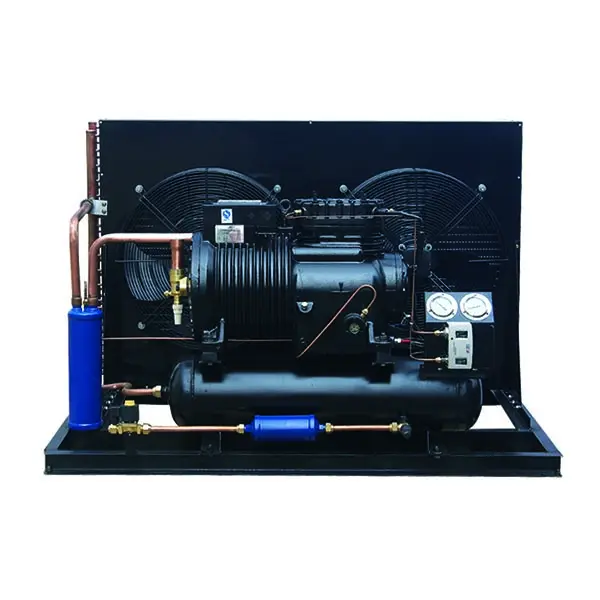
Selecting the correct compressor technology requires a clear understanding of mechanical limits. Facility engineers must evaluate how different mechanisms compare when subjected to grueling industrial conditions.
Reciprocating compressors utilize a crankshaft to drive pistons up and down within cylinders. While they are highly effective and economically viable for small to medium cooling loads, they often struggle in large-capacity scenarios. The primary issue lies in their mechanical complexity. Reciprocating units rely on multiple suction and discharge valves, piston rings, and connecting rods. Under continuous heavy-duty operation, these numerous moving parts become inevitable points of failure. They necessitate frequent maintenance and replacement. Conversely, the twin-rotor mechanism features very few moving parts. This makes it far more durable and much less prone to wear and tear in high-demand environments.
Centrifugal compressors utilize a high-speed rotating impeller to impart kinetic energy into the refrigerant. This energy is subsequently converted into pressure. They are the undisputed champions for ultra-massive cooling loads typically exceeding one thousand tons of refrigeration. However, centrifugal systems possess a critical operational limitation. They are highly susceptible to a phenomenon known as surging when operating at partial loads or under fluctuating pressure conditions.
Rotary models offer vastly superior mid-to-large range flexibility. Because they utilize positive displacement rather than dynamic compression, they easily maintain stable operation even when the cooling demand drops significantly. This flexibility makes them far more adaptable for facilities experiencing frequent shifts in production volume or thermal load.
Feature | Twin-Rotor Compressor | Reciprocating Compressor | Centrifugal Compressor |
|---|---|---|---|
Mechanical Design | Twin interlocking helical rotors | Pistons, cylinders, and valves | High-speed rotating impeller |
Optimal Capacity Range | Medium to Large | Small to Medium | Ultra-Large |
Part-Load Efficiency | Excellent via slide valves | Moderate with stepped cycling | Poor due to surging risks |
Maintenance Frequency | Low due to fewer moving parts | High from valve and ring wear | Medium with complex bearings |
Vibration Levels | Low | High | Very Low |
In the realm of industrial refrigeration, the way the motor and compressor are packaged together is just as critical as the internal compression mechanism itself. A Semi Hermetic Compressor represents a specific design architecture. Both the electric motor and the compressor are housed within the same heavy-duty cast-iron casing. Unlike a fully hermetic unit which is permanently welded shut and must be entirely discarded if an internal component fails, the semi-hermetic casing is bolted together using industrial gaskets.
This intelligent design provides distinct benefits for large-scale operations. First and foremost, it completely eliminates the need for a mechanical shaft seal. In traditional open-drive systems, the shaft seal is a notorious weak point. It frequently deteriorates and allows expensive and potentially hazardous refrigerant to leak into the atmosphere. By enclosing the motor within the pressurized refrigerant environment, the semi-hermetic design becomes virtually leak-proof. This drastically reduces environmental liability and refrigerant replacement costs.
Furthermore, because the casing is bolted rather than welded, facility technicians can easily unbolt the housing. They can perform on-site diagnostics, internal repairs, and motor rewinding without needing to replace the entire expensive unit. Many top-tier industrial systems utilize this exact cast-iron design to maximize both environmental compliance and long-term serviceability in demanding environments.
The industrial refrigeration sector is currently undergoing a massive transformation. Energy efficiency and strict environmental compliance are driving rapid engineering innovation. Facility managers are aggressively moving away from outdated and energy-hungry systems.
One major shift is the widespread adoption of low Global Warming Potential refrigerants. International regulatory frameworks are rapidly phasing out traditional synthetic gases. Modern rotary compressors are now engineered to be chemically and mechanically compatible with natural refrigerants like Ammonia and Carbon Dioxide. These natural gases offer superior thermodynamic properties and future-proof facilities against upcoming environmental legislation.
Additionally, smart capacity control is becoming the industry standard. Advanced microprocessors combined with stepless slide valves allow machines to operate at peak efficiency even at ten percent of their total load. Heat recovery integration is another rapidly growing trend. Industrial plants are capturing the immense heat discharged during the compression cycle. They repurpose this thermal energy for facility heating or hot water generation. This dual-utility approach drastically lowers total plant energy consumption and significantly improves overall operational ROI.
A Screw Chiller is a complete industrial chilling system. It utilizes a rotary compressor as its primary engine to rapidly remove heat from a liquid process fluid. This is usually water or a specialized glycol mixture. These high-capacity chillers serve as the thermal backbone for numerous heavy industrial sectors.
In the fast-paced world of plastics manufacturing, liquid polymer is injected into metal molds at extreme temperatures. To maintain product quality and prevent structural warping, this massive amount of heat must be extracted rapidly. A high-capacity chiller provides the stable and high-volume chilled water required to cool these molds instantly. By maintaining precise temperature control, manufacturers significantly reduce cycle times. This increases hourly production output without sacrificing product quality.
Chemical manufacturing and pharmaceutical compounding frequently involve exothermic reactions. These processes naturally release massive amounts of heat. If this thermal energy is not strictly controlled, it can lead to dangerous thermal runaways or the complete degradation of sensitive active pharmaceutical ingredients. Chillers powered by rotary technology provide exact and unwavering temperature precision. Their ability to deliver a continuous non-pulsing flow of cooling ensures that volatile chemical reactions remain within strict and safe temperature bands.
The global food and beverage industry requires immense cooling loads for critical processes. Milk pasteurization, brewery fermentation, and meatpacking plant climate control rely entirely on stable refrigeration. A heavy-duty chiller effortlessly handles the massive volumes of process fluid required to rapidly cool food products. This prevents bacterial growth and ensures strict compliance with health and safety regulations. The continuous reliability of these systems is absolutely crucial. A single cooling failure can result in the catastrophic spoilage of entire production batches.
Commercial warehousing and cold storage logistics present some of the most demanding environments for refrigeration systems. These sprawling facilities often span hundreds of thousands of square feet. They require massive volumes of air to be maintained at strict sub-zero temperatures. The thermodynamic challenge is twofold. First, the system must continuously remove heat to prevent inventory spoilage. Second, it must rapidly adapt to sudden thermal load spikes caused by forklift traffic, open loading dock doors, and the introduction of uncooled inventory.
Empirical data and field experience demonstrate that rotary technology excels in these exact conditions. It is the definitive Cold Storage Compressor for large-scale logistics. Advanced cast-iron models are capable of maintaining evaporation temperatures as low as minus forty degrees Celsius. As the helical rotors interlock, they continuously sweep large volumes of low-pressure suction gas and compress it smoothly. This continuous cycle allows the system to handle massive volumes of refrigerant with exceptional volumetric efficiency. It provides the stable high-capacity cooling required to keep vast warehouses at precise temperatures.
Beyond capacity, one of its most critical advantages in cold storage is its inherent resistance to liquid slugging. In expansive refrigeration circuits, it is common for small amounts of unevaporated liquid refrigerant to return to the compressor. Because liquids are incompressible, liquid slugging causes catastrophic mechanical failure in reciprocating compressors. It literally shatters valves and pistons. However, the robust rotary design tolerates minor liquid ingestion without sustaining mechanical damage. This drastically reduces the risk of sudden disastrous system failure.
Investing in industrial cooling infrastructure is a major capital expenditure. Selecting the correct Industrial Cooling Compressor requires careful evaluation of facility needs, long-term operational costs, and shifting regulatory landscapes.
The first step in procurement is conducting an accurate thermal load calculation for your facility. This is typically measured in Tons of Refrigeration or kilowatts. Facility managers must calculate the total heat load by evaluating transmission loads, product loads, internal heat generated by machinery, and infiltration from open doors. Oversizing a compressor is a common error. It leads to inefficient short-cycling and causes accelerated mechanical wear. Conversely, undersizing results in the equipment running continuously at maximum capacity. This leads to premature mechanical failure and an inability to maintain target temperatures during peak summer production.
Procurement teams must look far beyond the initial purchase price. The Total Cost of Ownership over a twenty-year lifespan is heavily dominated by electrical consumption and maintenance. Because cooling can account for up to half of a manufacturing plant energy bill, evaluating the Integrated Part Load Value is crucial. Investing in a unit with advanced stepless capacity controls will yield substantial financial returns. These energy savings quickly offset a higher initial capital expenditure.
Environmental regulations are becoming increasingly stringent. When selecting new equipment, it is imperative to ensure the compressor is mechanically and chemically compatible with modern eco-friendly refrigerants. Choosing a future-proof refrigerant ensures compliance with upcoming environmental legislation. It helps facility managers avoid forced and expensive system retrofits down the line.
While inherently durable, industrial cooling equipment requires proactive and disciplined maintenance to achieve its expected operational lifespan.
Oil Management and Lubrication Diagnostics: In oil-injected models, high-quality lubrication is the lifeblood of the system. The oil creates a hydraulic seal between the interlocking rotors to prevent gas blowback. It lubricates heavy-duty bearings and absorbs the intense heat generated during compression. Facility technicians must regularly test the oil for correct viscosity, moisture contamination, and acidity. Degraded oil loses its ability to seal the rotors. This results in internal gas leakage and a severe drop in cooling efficiency. Furthermore, the air-oil separator must be inspected annually to ensure lubricant is not escaping into the wider refrigeration circuit.
Routine Inspections and Predictive Maintenance: Transitioning from reactive repair to predictive maintenance is highly cost-effective. Facility engineers should implement routine vibration analysis using accelerometers. This detects microscopic changes in rotor balance or early signs of bearing wear months before they cause a failure. Thermal imaging of the motor casing and electrical contactors easily identifies overheating issues caused by voltage imbalances or failing components.
Filter Replacements and System Cleanliness: Internal cleanliness is paramount. Suction filters must be inspected and replaced regularly to prevent pipe scale, welding slag, or metallic debris from entering the compression chamber. Even microscopic debris can score the precision-machined edges of the helical rotors. This permanently reduces the volumetric efficiency of the machine. Oil filters must also be replaced strictly according to manufacturer guidelines.
The rotary screw design remains the undisputed champion of large-capacity industrial cooling. By replacing the violent start-stop motion of traditional pistons with a smooth continuous twin-rotor mechanism, these machines deliver unmatched energy efficiency. They provide incredible temperature stability and lasting mechanical durability.
Whether you are outfitting a high-speed plastics manufacturing plant, a sensitive pharmaceutical lab, or a sprawling cold storage warehouse, choosing the right equipment directly reduces facility energy costs. It prevents disastrous downtime. Proper predictive maintenance further extends the lifespan of your cooling system to ensure decades of reliable performance. Are you ready to upgrade your industrial cooling infrastructure? Explore the high-performance range of industrial refrigeration solutions at DM-Compressor to find the exact match for your heavy-duty demands and safeguard your bottom line.
Under standard operating conditions, an industrial rotary unit is engineered to deliver between 40,000 to 60,000 operating hours before requiring a major mechanical overhaul. This exceptional longevity is largely due to its continuous rotary design. It features very few moving parts compared to piston-based alternatives. Achieving this maximum lifespan requires strict adherence to preventative maintenance schedules, particularly concerning oil management and vibration monitoring.
An open-drive compressor features an external electric motor connected to the compressor via a drive shaft. This exposed shaft must penetrate the compressor casing, requiring a mechanical seal that is highly prone to wear and refrigerant leaks over time. In contrast, a semi-hermetic architecture encloses both the electric motor and the compressor within a single bolted cast-iron shell. This brilliantly eliminates the need for a shaft seal and prevents hazardous leaks while still allowing technicians to unbolt the casing for necessary internal maintenance.
A heavy-duty rotary chiller achieves superior energy efficiency through its continuous sweeping motion and advanced capacity control mechanisms. Reciprocating chillers rely on starting and stopping or mechanically unloading individual cylinders, which creates massive electrical spikes and energy waste. Rotary chillers utilize stepless slide valves or variable frequency drives. This allows the system to smoothly adjust its cooling output to match the exact real-time thermal load of the facility.
Yes, they are highly ideal for commercial cold storage applications. Warehousing logistics require the continuous movement of massive volumes of low-pressure refrigerant to maintain stable sub-zero temperatures. Rotary equipment provides exceptional volumetric efficiency and continuous vapor flow. Additionally, their robust design allows them to handle minor liquid refrigerant slugging without suffering the catastrophic mechanical failures that typically destroy reciprocating compressors.
A twin-screw design utilizes two interlocking helical rotors driven by a single motor to compress the gas. A single-screw design uses one main cylindrical rotor that meshes with two lateral gate rotors. While both are positive displacement machines, the twin-rotor mechanism is far more common in heavy industrial cooling due to its superior durability, simpler manufacturing tolerances, and highly proven track record in extreme continuous-duty environments.
The mechanical slide valve is located within the compressor housing parallel to the rotors. When the facility cooling demand drops, the valve slides open to physically shorten the effective length of the compression chamber. This allows a specific portion of the uncompressed suction gas to bypass the rotors and return directly to the inlet. Because the compressor is doing less physical work compressing a smaller volume of gas, the motor draws significantly less electrical power.


