
close
Choose Your Site
Global
Social Media
Views: 0 Author: Site Editor Publish Time: 2026-10-21 Origin: Site


Industrial operations frequently encounter a frustrating mechanical challenge. Excessive vibration, disruptive noise, and accelerated equipment wear plague many facilities, all caused by inconsistent compressed air or gas flow. Step onto the floor of an older manufacturing plant, and you will likely hear the rhythmic, violent hammering of air lines. This occurs because traditional reciprocating compressors inherently create aggressive pulses of air due to their fundamental start-stop stroke mechanics. Each compression stroke sends a sudden surge of pressure through the system. Over time, this fatigues piping, damages sensitive downstream valves, and disrupts precision manufacturing processes.
To resolve these mechanical inconsistencies, the Screw Compressor has emerged as the definitive engineering solution for delivering a smooth, continuous, and highly reliable stream of compressed air. Unlike piston-driven models, rotary mechanisms maintain a steady volumetric output without destructive pressure spikes.
In this comprehensive technical guide, we will break down the exact mechanical principles behind this technology. We will objectively compare rotary equipment to traditional reciprocating designs, highlight specialized variations, and provide a practical framework for selecting the appropriate system for demanding industrial applications.
Continuous Compression Cycle: Unlike piston-driven machinery, a twin-rotor system utilizes continuously rotating helical screws to trap, compress, and discharge air without mechanical interruption. This effectively eliminates downstream pulsation.
Reduced Wear and Tear: Delivering a pulsation-free flow inherently protects downstream infrastructure. Piping networks, control valves, and precision pneumatic tools are shielded from the structural fatigue typically caused by inconsistent pressure waves.
High Efficiency at Scale: Advanced mechanical designs offer superior volumetric and energy efficiency by utilizing intercooling between compression phases. This makes them ideal for heavy-duty, continuous industrial applications.
Versatile Applications: From high-demand automotive manufacturing plants to industrial refrigeration, rotary screw technology remains the baseline standard for demanding 24/7 operations.
Looking at the broader industrial landscape, there is a clear and accelerating shift away from legacy pneumatic systems toward highly optimized, continuous-flow technologies. As modern manufacturing increasingly integrates Industry 4.0 standards, IoT sensors, automated robotics, and ultra-precise CNC machining, the tolerance for pressure fluctuations has dropped to near zero. A sudden drop or spike in air pressure can instantly misalign a robotic arm or ruin a delicate paint finish. Consequently, facilities are no longer just looking for raw power. Plant engineers are prioritizing air quality, absolute pressure stability, and energy optimization. This evolution in manufacturing standards reinforces why continuous, pulsation-free rotary technology is rapidly becoming a strict requirement rather than an optional upgrade for modern smart factories.
At its core, this equipment is classified as a highly engineered type of positive displacement machine. Instead of using a piston moving violently up and down inside a cylinder, this compressor relies on sweeping rotational mechanics to reduce the volume of a trapped gas, thereby increasing its internal pressure.
The central architecture consists of two interlocking helical rotors housed inside a tightly toleranced metal casing. These internal components are distinct in design. One is a male rotor featuring convex lobes, while the other is a female rotor with concave flutes. Often engineered with a highly efficient 5:6 or 4:5 lobe profile ratio, they mesh together with microscopic precision as they turn in opposite directions.
Specifically, these systems generally fall into two categories: oil-injected and oil-free. In oil-injected models, a specialized fluid is introduced directly into the compression chamber. This oil serves three critical functions. It acts as a dynamic sealant to close the microscopic gaps between the rotors, functions as a coolant to absorb the intense heat of compression, and provides essential lubrication for the heavy-duty bearings. In contrast, oil-free models rely on highly precise timing gears to ensure the rotors never physically touch. This prevents metal-to-metal contact and delivers the completely uncontaminated air strictly required in pharmaceutical and food processing industries.
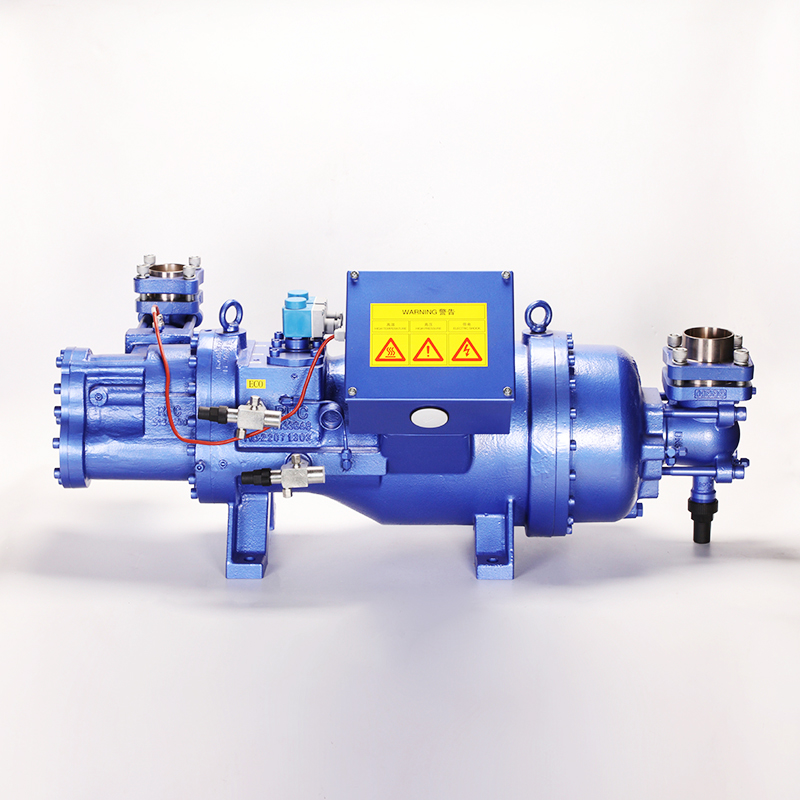
The fundamental advantage of this technology lies in its fluid, uninterrupted mechanical motion. To fully grasp this, we must break down the operational cycle into three distinct but continuous stages.
Suction Intake: As the helical rotors begin to turn, they unmesh at the inlet port end of the casing. This mechanical unmeshing creates an expanding void, drawing ambient air or gas into the spaces between the rotor lobes.
Compression: As rotation continues, the inlet port is structurally cut off by the housing. The male and female rotors then mesh together, progressively reducing the volume of the trapped pocket of air. The air is physically forced axially down the length of the rotors, increasing in pressure as the available space shrinks.
Discharge: Eventually, the highly compressed air reaches the opposite end of the casing. At this exact moment, the rotor geometry aligns with the discharge port, pushing the air out into the primary distribution network.
The defining characteristic that renders this mechanism virtually pulsation-free is the overlapping nature of the helical threads. Because the rotors are constantly turning, new pockets of air are continuously being drawn in, compressed, and discharged simultaneously along the length of the rotors. There is absolutely no mechanical dead spot or pause in the delivery cycle.
Consider a practical analogy. Squeezing a tube of toothpaste continuously from the bottom up yields a smooth, unbroken ribbon. In stark contrast, a reciprocating system operates more like a traditional bicycle pump, where the output stops entirely while the piston resets for the next stroke. This continuous, sweeping motion is what allows a Twin Screw Compressor to maintain an unwavering discharge pressure.
To truly appreciate the smooth operation of rotary technology, it is helpful to compare it directly against the traditional reciprocating mechanics that dominate lighter-duty applications.
Reciprocating compressors generate pressure through the up-and-down strokes of a piston. Every upward stroke compresses the air and forces it into the system, creating a sudden surge in pressure. Subsequently, every downward stroke draws in new air, causing a momentary drop in output. This alternating cycle inherently results in a pulsing effect—a rhythmic hammering of air into the piping system.
This pulsation is not merely an annoyance; it introduces severe operational liabilities into an industrial environment. The constant hammering causes severe vibration, which leads to structural fatigue, loosened brackets, and stress fractures at pipe joints. Furthermore, the violent mechanical knocking of pistons generates extremely high noise levels, often forcing facilities to invest heavily in extensive soundproofing.
By upgrading to a modern Rotary Compressor, facilities fundamentally eliminate these destructive pressure waves. Maintaining a constant flow protects the integrity of the downstream network, extending the lifespan of pneumatic tools and significantly reducing overall maintenance downtime.
Performance Metric | Reciprocating Piston Compressor | Rotary Screw Compressor |
|---|---|---|
Air Delivery | Pulsing and intermittent | Smooth, continuous, and stable |
Duty Cycle | 50% to 60% requires cool-down periods | 100% Continuous 24/7 operation |
Vibration & Noise | High vibration, often requires heavy foundations | Low vibration, quiet operation, often skid-mounted |
Wear and Tear | High wear on valves, rings, and cylinders | Minimal internal contact, long-lasting precision rotors |
Energy Efficiency | Drops significantly as internal rings wear down | Maintains consistent volumetric efficiency over time |
Achieving perfectly continuous flow demands extreme manufacturing precision and high-grade internal components.
Precision Rotors: The exact curvature of the male lobes and female flutes is mathematically optimized to ensure maximum air entrapment with minimal internal leakage, a phenomenon known in the industry as blow-by. Tight tolerances mean that air cannot easily slip backward during the compression phase, guaranteeing consistent pressure delivery.
Heavy-Duty Bearings: Maintaining these microscopic clearances requires high-precision bearings, such as premium SKF components. These bearings support the rotor shafts against the immense radial and axial forces generated during compression. By keeping the rotors perfectly aligned, the bearings prevent catastrophic friction and maintain the steady volumetric efficiency of the unit over tens of thousands of operating hours.
Specialized Hermetic Designs: In specific industrial sectors like HVAC, chemical processing, and large-scale commercial refrigeration, the environment demands specialized adaptations. Enter the Semi Hermetic Compressor variant. Unlike standard open-drive units, this design houses both the electric motor—often featuring IP55 protection and F class insulation—and the compression rotors within a single, heavy-duty casing. It eliminates the need for a vulnerable external shaft seal, thereby completely preventing the leakage of volatile refrigerant gases into the atmosphere. Crucially, it still utilizes the exact same twin-rotor mechanics, meaning delicate refrigerant loops benefit from pulsation-free circulation.
For facilities grappling with exceptionally high volume or high-pressure demands, standard single-stage compression may consume excessive electrical energy. In these scenarios, engineers frequently specify a Double Stage Compressor to maximize efficiency without sacrificing the smooth delivery of air.
Instead of forcing the ambient air to reach the final target pressure in one single, aggressive step, this advanced design splits the mechanical workload across two separate sets of rotors connected in a series.
Ambient air enters the first stage, where it is partially compressed to an intermediate pressure. Because compressing a gas generates significant heat, this intermediate air becomes very hot. Before entering the second stage, the air passes through an intercooler—a heat exchanger that rapidly drops the air temperature. The cooled, denser air is then routed into the second stage rotors, where it is compressed to the final required pressure, often reaching up to 16 to 40 bar depending on the industrial requirement.
Intercooling prevents the equipment from overheating, reducing thermal stress on internal components and extending the life of the lubricating oil. Furthermore, the laws of thermodynamics dictate that compressing cooler, denser air requires significantly less electrical energy. Two-stage systems can reduce energy consumption by up to 15% compared to single-stage models of the same horsepower. Despite dividing the process into two distinct stages, the overlapping rotation of both rotor sets ensures that the final output remains entirely continuous and steady.
The reliability and stability of continuous rotary technology make it the gold standard across numerous high-stakes industries.
Manufacturing & Automotive: Modern assembly lines rely heavily on pneumatics. Precision robotics, pneumatic clamping systems, and automated paint booths require absolute pressure stability. Even a minor pressure pulse can cause a robotic arm to stutter or a paint nozzle to spray unevenly, resulting in costly product defects. A reliable twin-rotor system provides the steady baseline pressure necessary for flawless automation.
Food and Beverage: In food processing, compressed air is used for pneumatic conveying, sorting, aeration, and bottling. Pressure surges can easily rupture delicate packaging materials or disrupt automated filling sensors. Oil-free rotary systems are particularly vital here, providing both smooth delivery and zero contamination to meet strict hygiene standards.
Chemical & Petrochemical: Moving hazardous, volatile gases safely is a critical safety concern. The smooth operation of rotary mechanics prevents the generation of internal pressure waves that could otherwise disrupt sensitive chemical reactions or cause premature failure in safety relief valves.
Selecting the correct equipment requires a careful analysis of your facility's operational profile. Making the wrong choice can lead to energy waste, inadequate pressure, or premature equipment failure. Use the following engineering standards to guide your selection.
Assess Your Duty Cycle: Are you running intermittent shifts with long breaks, or is your facility operating 24/7? Reciprocating units might suffice for intermittent use because they require downtime to cool off. However, if your operations demand a continuous, unrelenting supply of air, rotary technology is explicitly designed for continuous 100% duty cycles without requiring cool-down periods.
Calculate Precise Flow Requirements: You must accurately match the compressor output to your factory needs. This involves calculating CFM, or Cubic Feet per Minute, which measures the volume of air required to run all simultaneous tools. You must also determine the exact PSI, or Pounds per Square Inch, which measures the required force. Oversizing the unit leads to wasted electricity, while undersizing results in pressure drops that halt production.
Prioritize Variable Speed Drive Technology: The initial purchase price of industrial equipment typically represents only a fraction of its total lifecycle cost. Energy consumption accounts for the vast majority of a compressor's operational expense. Facility managers should strongly consider units equipped with Variable Speed Drive technology. A VSD automatically adjusts the rotational speed of the rotors to match real-time air demand, virtually eliminating wasted energy during periods of low production.
The ingenious interlocking helical rotor design is exactly what transforms erratic, pulsing air into a smooth, reliable stream of industrial power. By continuously drawing in and discharging air without mechanical interruption, rotary technology effectively solves the chronic vibration and fatigue issues associated with older piston systems.
Upgrading from traditional reciprocating technology to a modern rotary system—whether a standard single-stage, an ultra-efficient double-stage unit, or a specialized semi-hermetic variant—is a strategic investment. It directly enhances facility uptime, extends pipeline longevity, and yields significant daily energy savings.
Do not let inconsistent air pressure dictate your production efficiency or damage your downstream equipment. If you are ready to stabilize your pneumatic network, explore the high-performance, precision-engineered solutions available at DM Compressor to find a pulsation-free system perfectly matched to your exact operational requirements.
While no mechanical device is mathematically perfect, these compressors produce a flow so smooth and continuous that, for all practical industrial and commercial purposes, it is considered completely pulsation-free. It effectively eliminates the destructive pressure spikes commonly associated with piston compressors.
A single-stage compressor achieves the desired air pressure in one continuous sweep through a single set of rotors. A double-stage compressor divides the compression process into two distinct steps, cooling the air in between via an intercooler. This intermediate cooling makes the double-stage system highly energy-efficient for heavy-duty, high-pressure industrial applications.
Yes. In fact, they are engineered specifically for 100% continuous duty cycles. Unlike reciprocating compressors that must periodically shut down to dissipate heat, a rotary system thrives in demanding 24/7 operational environments without suffering premature wear.
A semi hermetic compressor seals the electric motor and the mechanical compression rotors within the exact same leak-proof casing. When combined with twin-screw technology, this design provides a pulsation-free environment that is highly efficient and exceptionally safe for handling volatile refrigerants without the risk of atmospheric leakage.
Because they lack the violent mechanical knocking and severe air pulsation of piston compressors, rotary models run much smoother and quieter. When properly enclosed in a standard sound-dampening acoustic canopy, they produce significantly lower decibel levels, making for a safer, more comfortable, and OSHA-compliant work environment.
When properly maintained with regular oil changes and filter replacements, the air end—the core rotor assembly—of a high-quality industrial twin-screw compressor can easily last between 40,000 to 60,000 operating hours before requiring a major overhaul or rebuild.
A Variable Speed Drive, or VSD, adjusts the speed of the compressor motor to precisely match the real-time air demand of the facility. Instead of running at full capacity constantly, the VSD slows the rotors down during low-demand periods, which dramatically reduces electricity consumption and further minimizes mechanical wear.


