

close
Choose Your Site
Global
Social Media
Views: 0 Author: Site Editor Publish Time: 2026-06-01 Origin: Site


Unmaintained HVAC systems quietly drain operational budgets. They frequently trigger unexpected mid-season downtime. A severely neglected Condensing Unit accelerates baseline compressor wear. It immediately spikes your facility's energy consumption. Poor maintenance also risks voiding critical manufacturer warranties. Many facility operators unfortunately mistake superficial visual inspections for true preventative maintenance. Real upkeep requires rigid compliance. It demands deep mechanical evaluation. You cannot simply glance at the exterior cabinet to verify performance. We must confirm the system operates safely within factory limits. In this comprehensive guide, you will uncover the exact technical requirements needed for proper equipment maintenance. We outline the strict boundaries between safe in-house upkeep and required professional service. Finally, you will receive an actionable framework. You can use it to thoroughly evaluate your next HVAC service contract.
Baseline maintenance requires a dual approach: continuous airflow management (in-house) and bi-annual mechanical/electrical audits (professional).
Dirty condenser coils can degrade system efficiency by up to 30%, directly impacting operational expenditure (OpEx).
EPA regulations and manufacturer warranties dictate that refrigerant handling and advanced electrical diagnostics must be performed by certified technicians.
A credible preventative maintenance contract should explicitly list verifiable tasks (e.g., measuring capacitor microfarads, checking amp draws) rather than vague "inspections."
Preventative maintenance drives measurable financial outcomes. The Department of Energy clearly outlines baseline energy standards for commercial cooling systems. According to their guidelines, restricted airflow heavily penalizes system efficiency. Dirt accumulating on exterior coils acts as an unwanted insulator. This raises the overall condensing temperatures. The compressor then overworks to shed the trapped heat. It draws higher amperage. This excess power consumption directly inflates your monthly utility bills.
Warranty compliance introduces another serious financial risk. Major equipment manufacturers like Carrier or Trane enforce strict warranty terms. They require documented proof of annual professional maintenance. Manufacturers will swiftly deny compressor warranty claims if they suspect neglect. You must maintain formal service records to protect your capital investments.
Asset lifespan drops significantly without regular mechanical intervention. You can clearly see this divergence when comparing proactive facilities to reactive ones. A well-documented maintenance strategy extends equipment viability dramatically.
Maintenance Approach | Expected Asset Lifespan | Primary Operational Impact |
|---|---|---|
Proactive Service | 15–20 years | Predictable energy usage, minimal downtime, honored warranties. |
Reactive Service | 7–10 years | Early compressor failure, high emergency repair costs, denied claims. |
You essentially choose between stable operational planning or sudden, expensive emergencies. Proactive scheduling eliminates the costly surprises associated with premature compressor death.
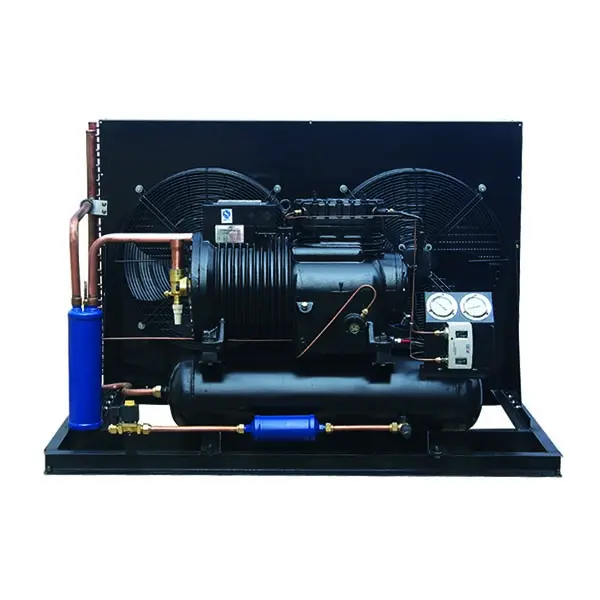
A rigorous maintenance protocol separates visual checks from actual mechanical restoration. Professionals follow a strict framework. They break the system down into coil health, electrical integrity, and mechanical infrastructure.
Airflow dictates everything in a cooling system. Technicians follow precise steps to restore factory-spec heat transfer capabilities.
Debris Removal: Technicians manually extract leaves, twigs, and trash from the internal chassis. This prevents blockages around the base pan drain ports.
Chemical Application: Cleaning delicate aluminum fins requires technical precision. Technicians must use pH-balanced chemical foaming agents. Highly acidic or highly alkaline cleaners strip the protective coating off the fins. This degrades the metal and accelerates future corrosion.
Fin Straightening: Debris or accidental impacts often bend the aluminum fins. Technicians use specialized fin combs. They carefully pull the crushed fins back into alignment. This simple physical correction restores the proper volume of air passing over the coil surface.
Electrical failures cause the majority of sudden system shutdowns. Preventative maintenance identifies these weaknesses before they cascade into larger problems.
Technicians closely inspect the contactors. Contactors act as the main high-voltage switches for the compressor. Over time, electrical arcing causes pitting and dark burn marks on the contact surfaces. Pitted contactors eventually weld shut or fail to close properly. This triggers catastrophic short-cycling. Replacing a worn contactor early saves the compressor from extreme electrical stress.
Capacitors require equally strict testing. Capacitors provide the initial electrical jolt needed to start the motors. Technicians test them to detect minute capacitance drops. They measure the output in microfarads. A failing capacitor might still run the system temporarily. However, it will ultimately fail during a peak summer load. Replacing it proactively prevents a total system lockout.
The mechanical parts endure intense vibration and thermal shifting. Technicians perform visual inspections of the suction line insulation. Missing insulation causes unwanted condensation and heat gain. This slightly reduces overall system efficiency.
Fan motors demand physical inspection. Technicians check the motor for excessive vibration. They listen closely for grinding noises indicating bearing wear. They also verify proper blade balancing. An unbalanced fan blade shakes the entire unit violently. This vibration can eventually fracture delicate copper refrigerant lines inside the cabinet.
Facility teams often blur the lines between routine upkeep and technical maintenance. You must establish clear boundaries to maintain safety and compliance. We separate these tasks into high-frequency safe zones and high-risk professional territory.
Your internal staff can safely manage several high-frequency, low-risk tasks. These actions protect the equipment without exposing personnel to danger.
Maintain a 2-Foot Clearance Rule: Keep the immediate perimeter fully clear. Trim back encroaching vegetation. Rake away dead leaves. The equipment needs unobstructed airflow from all sides.
Conduct Monthly Visual Audits: Walk past the unit regularly. Listen for unusual metallic noises. Look for localized freezing on the copper lines. Watch out for visible oil streaks on the chassis. Oil spots almost always indicate a slow refrigerant leak.
Rinse Exterior Debris: You can safely wash loose dirt off the exterior. Gently rinse the panels using a low-pressure garden hose. Never use a high-pressure washer. Pressure washers instantly fold the delicate aluminum fins flat. This blocks airflow completely and ruins the coil.
Certain tasks trigger serious compliance and safety risks. You must reserve these specific actions for certified HVAC technicians.
Sealed Refrigerant Circuit Tasks: Only licensed professionals should attach gauges to the system. Federal EPA Section 608 regulations strictly govern refrigerant handling. Improper handling causes environmental damage and triggers massive fines.
Electrical Data Verification: Technicians must check running amps on the compressor and the fan motor. They compare these live readings directly against the unit’s factory data plate. This requires handling live high-voltage components.
Chemical Cleaning Applications: Applying foaming coil cleaners requires safety gear. Professionals understand how to safely route the chemical runoff to protect local landscaping and groundwater.
You cannot rely on arbitrary timelines for equipment service. The industry dictates specific frequency baselines based on operational realities and environmental stress.
The standard baseline requires a minimum of one comprehensive visit per year. You should schedule this visit in early spring. Servicing the equipment prior to the peak cooling season ensures maximum reliability. It allows technicians to catch failing capacitors before the summer heat wave arrives.
Location heavily influences your maintenance frequency. Standard schedules fail in harsh environments.
Coastal environments demand aggressive adjustments. Airborne salt causes rapid saline degradation. Systems near the ocean require higher-frequency washing. Technicians often apply specialized anti-corrosive coatings to protect the exposed metal components.
Industrial or high-pollen areas also require customized schedules. Airborne manufacturing dust or heavy tree pollen quickly clogs the fins. Facilities in these zones usually require bi-annual coil deep-cleaning. This frequency prevents rapid fouling and keeps energy costs stable.
You must maintain a strict maintenance log. Tie every service record directly to the specific unit's serial number. This documentation provides a clear historical baseline. If the compressor fails prematurely, you will need this precise log. The manufacturer will demand it before approving any warranty replacement.
Not all service contracts deliver equal value. Many contractors offer cheap agreements but deliver very little actual preventative service. You must evaluate proposals critically.
A low-effort bid relies on vague language. It might simply state "Check AC" or "Inspect cooling system." This language offers you zero accountability.
A high-quality proposal features absolute transparency. It includes an itemized task list. It specifies exact mechanical actions. You will see terms like "measure voltage imbalances," "test capacitor microfarads," and "lubricate motor bearings." Demand this level of detail before signing.
A trustworthy contractor provides solid proof of their work. They supply objective verification metrics. Below is a simple chart illustrating what you should expect from a proper maintenance contract.
Contract Deliverable | Low-Effort Bid | High-Quality Proposal |
|---|---|---|
Visual Proof | Verbal confirmation only. | Time-stamped before-and-after photos of cleaned coils. |
System Pressures | "Pressures look good." | Exact superheat and subcooling numerical readings logged. |
Electrical Data | No data provided. | Documented amp draw comparisons against factory ratings. |
Evaluate how the maintenance contract impacts your facility during a crisis. Standard contracts should prioritize your business during peak summer outages. Review the exact emergency response times. Check if the agreement offers discounted parts pricing for unexpected mid-season failures. A strong contract acts as an operational insurance policy.
Postponing maintenance carries steep consequences. It silently transfers costs from predictable operational budgets over to unpredictable capital replacements. Ignoring minor electrical wear today guarantees a major compressor failure tomorrow. Proactive upkeep stabilizes your environment and secures your warranty status.
Take immediate action to protect your investments. Audit your current equipment environment today. Check for proper clearances and note any visible wear. Next, review your existing preventative maintenance contract. Compare it directly against the rigorous frameworks provided in this guide.
Do not wait for a mid-summer breakdown to discover your maintenance plan is flawed. Download a complete Condensing Unit Audit Checklist today, or schedule a professional site assessment to secure your cooling infrastructure.
A: Once a year professionally; monthly for basic visual/clearance checks by the owner/facility team.
A: Light water rinsing is acceptable, but chemical cleaning and deep debris removal carry a high risk of bending delicate fins or damaging electrical components, requiring a professional.
A: Immediate 10-30% drop in energy efficiency, increased risk of mid-season compressor failure, and potential nullification of the manufacturer's warranty.
A: Address this as a symptom of a broader issue—usually severely restricted airflow or a refrigerant leak—requiring immediate professional shutdown and diagnostics.


