
close
Choose Your Site
Global
Social Media
Views: 0 Author: Site Editor Publish Time: 2026-07-06 Origin: Site


Commercial and industrial cooling environments present immense operational challenges. Facilities require heavy-duty compression systems capable of handling highly variable load conditions. Unexpected system downtime destroys sensitive inventory and disrupts critical supply chains. You need a reliable solution balancing immense cooling capacity and immediate field serviceability. Fully sealed units often force complete system replacements during minor internal failures. Such limitations pose significant risks for high-stakes retail and industrial applications.
This article introduces the Semi-hermetic Reciprocating Compressor as the industry standard for these demanding scenarios. We provide facility managers and engineers a transparent, decision-focused evaluation framework. You will learn exactly when to specify, retrofit, or rebuild this specific refrigeration compressor type. By understanding these mechanical principles, you can optimize system longevity and maintain operational resilience.
Serviceability Lowers TCO: Unlike welded hermetic units, the bolted cast-iron casing of semi-hermetic models allows for on-site rebuilding of internal components (valves, pistons, motors), extending equipment lifespan.
Ideal for Heavy Commercial Loads: Primarily deployed in supermarket rack systems, large walk-in freezers, and industrial process cooling where capacity demands fluctuate.
Refrigerant Adaptability: Modern semi-hermetic models are highly compatible with transitional and long-term low-GWP (Global Warming Potential) refrigerants, aiding in environmental compliance.
Higher Upfront Cost, Lower Replacement Risk: The initial capital expenditure is higher than fully hermetic alternatives, but the ability to repair prevents total system replacement during localized component failures.
Understanding the architectural difference between compression technologies drives better facility decisions. A fully hermetic unit features a sealed, welded steel shell. You cannot open it. If a minor internal component fails, you must discard the entire unit. Conversely, a Semi-hermetic Reciprocating Compressor utilizes a heavy-duty bolted cast-iron assembly. This design allows technicians to access internal mechanics. They can unbolt the cylinder heads, inspect the pistons, and replace damaged valve plates.
This structural difference directly impacts operational continuity. When you operate a massive cold storage facility, equipment longevity matters. You can perform routine rebuilds on semi-hermetic units over decades. Technicians simply replace worn stators or bearings on-site. This prevents forced total replacements. You keep the heavy casing piped into your system. You only swap the compromised moving parts.
Field serviceability heavily mitigates system downtime. Supply chain integrity relies on constant temperature control. A failed sealed compressor requires sourcing a completely new matching unit. Delivery delays can leave retail food zones offline for days. A rebuildable casing minimizes offline time. Technicians carry standard replacement valves and gaskets in their service vehicles. They can restore operational capacity within hours instead of weeks.
Feature | Semi-Hermetic Architecture | Fully Hermetic Architecture |
|---|---|---|
Casing Design | Bolted, cast-iron assembly | Welded, sealed steel shell |
Serviceability | High. Internal parts are accessible. | None. Requires complete disposal. |
Downtime Risk | Low. Rebuilds happen on-site. | High. Dependent on unit replacement. |
Lifespan Potential | 10-15+ years (via rebuilding) | Limited to initial component failure |
Best Practice: Always maintain a strategic inventory of common replacement parts. Stocking spare valve plates and gaskets for your specific casing ensures immediate emergency repairs.
Certain facility types demand unmatched mechanical resilience. Heavy cast-iron compressors dominate these specific environments due to their robust staging capabilities.
Supermarket Refrigeration Racks: Modern grocery stores utilize multiplex parallel rack systems. These systems handle constantly varying medium-temperature and low-temperature loads. A single heavy-duty compressor can cycle specific cylinders to match exact display case demands.
Industrial Cold Storage & Walk-In Freezers: Deep freezing requires aggressive pressure ratios. Reciprocating pistons maintain excellent performance stability in these extreme low-temperature applications. They effectively push refrigerant against high head pressures without losing volumetric efficiency.
Process Cooling and Chiller Systems: Manufacturing and chemical processing depend on critical load reliability. Plants usually have ample equipment footprint space. They easily accommodate large, heavy cast-iron cooling units. These compressors provide uninterrupted thermal control for sensitive industrial batches.
Marine and Transport Refrigeration: Cargo ships and heavy-duty transport vehicles experience intense mechanical stress. Ocean waves and rough roads destroy fragile equipment. The massive cast-iron shell provides structural rigidity. It survives extreme vibration while keeping perishable cargo secure.
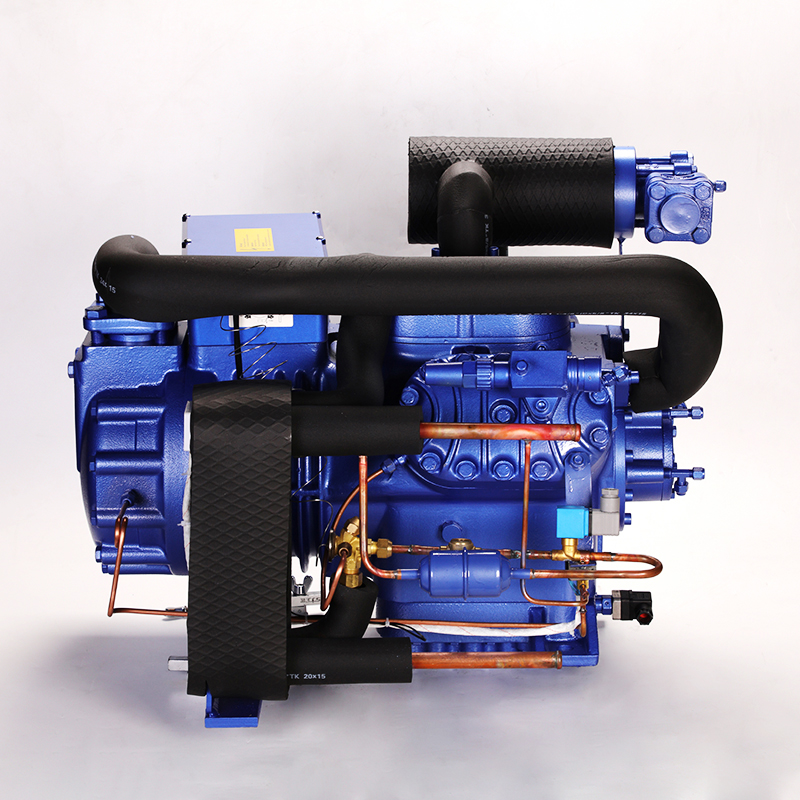
Cooling demands rarely remain static throughout the day. Facilities experience peak thermal loads during operating hours and minimal loads overnight. You must assess cylinder unloading capabilities. Many multi-cylinder units allow physical unloading. They bypass specific cylinders to reduce output. Furthermore, variable frequency drive (VFD) compatibility proves essential. Adding a VFD allows the motor to spin slower or faster. This precisely matches real-time thermal loads. It prevents rapid on-off cycling, significantly reducing mechanical wear.
Environmental regulations constantly evolve. You must evaluate engineering tolerances for modern low-GWP refrigerants. Many facilities currently transition to CO2 (R-744) subcritical systems, R-448A, or R-449A. These advanced refrigerants require robust internal seals and specialized valve designs. Oil management also requires strict attention. Selecting the correct lubricant prevents chemical breakdowns. Polyester (POE) oils pair well with modern HFC and HFO blends. Mineral oils typically support legacy refrigerants. Mixing incompatible oils and refrigerants destroys internal bearings.
Engineers analyze the Coefficient of Performance (COP) across required evaporating and condensing temperatures. Piston-driven mechanics offer distinct advantages at deep freezing envelopes. When comparing them to scroll compressors, clear differences emerge. Scroll units run quietly and handle medium-temperature loads beautifully. However, reciprocating mechanics generally win at extreme low temperatures. They handle steep pressure ratios without suffering dangerous discharge temperature spikes.
Specifying a heavy-duty refrigeration compressor introduces physical and logistical challenges. Facility managers must prepare their infrastructure before installation.
First, address weight and footprint constraints. These units feature thick cast-iron bodies. They weigh significantly more than sealed steel alternatives. You must evaluate the logistical reality of installing them. Roofs may require reinforced structural support. Mechanical rooms might need expanded equipment pads. Rigging these massive units into tight spaces demands specialized lifting equipment and careful planning.
Next, prioritize vibration and noise management. Reciprocating pistons inherently generate mechanical vibration. Large masses moving up and down create structural resonance. You must specify appropriate isolation mounts. Spring isolators or heavy rubber pads absorb these kinetic forces. Additionally, pistons produce distinct acoustic pulses. Recommend installing discharge mufflers on the piping lines. Acoustic enclosures also help in noise-sensitive facility zones like hospitals or high-end retail spaces.
Finally, understand common failure modes and diagnostics. Several operational risks can destroy internal components.
Liquid Slugging: Compressors can only pump vapor. If liquid refrigerant enters the cylinders, it shatters the valve plates instantly.
Flooded Starts: Refrigerant migrates into the oil during off cycles. When the motor starts, the oil violently foams. This strips lubrication from the bearings.
Loss of Lubrication: Low oil levels cause catastrophic friction. Metal grinds against metal, seizing the crankshaft.
Highlight the absolute necessity of crankcase heaters. These small heaters boil liquid refrigerant out of the oil before startup. Furthermore, install proper oil pressure safety controls. If oil pressure drops, the control shuts down the motor immediately. This action saves the pistons from destruction.
Common Mistake: Never bypass an oil pressure safety switch to keep a system running. Overriding this control guarantees total mechanical failure within hours.
Choosing the correct equipment requires a structured approach. Use this clear decision logic to evaluate your facility needs.
Step 1: The Repair vs. Replace Threshold
Determine the projected facility lifespan. Does your operation require a permanent, long-term solution? If yes, the serviceability of a bolted unit justifies the investment. Alternatively, a cheaper hermetic unit might suffice for a temporary cooling structure.
Step 2: Load Profiling
Map your peak and minimum cooling loads accurately. Ensure the chosen equipment handles the required staging. It must scale down during low-load periods without excessive short-cycling. Short-cycling burns out electrical contactors and stresses the motor windings.
Step 3: Vendor Ecosystem Compatibility
Evaluate integration capabilities. Your new equipment must communicate seamlessly with existing facility management systems. Ensure electrical parameters match your current Danfoss, Copeland, or Carel controllers. Compatibility simplifies the final commissioning process.
Next Steps:
Recommend consulting an industrial HVAC/R engineer. They will run a customized lifecycle analysis based on your specific load profile. This professional review ensures you select equipment sized perfectly for your operational demands.
Shortlisting Decision Chart | ||
Decision Factor | Look For | Red Flag |
|---|---|---|
Load Variability | VFD compatibility, active cylinder unloading | Single-speed only on varying loads |
Control Systems | Matches existing Danfoss/Carel protocols | Requires complete controller overhaul |
Maintenance Access | Clear clearance for head removal | Unit installed flush against walls |
Specifying a heavy-duty rebuildable compressor represents an investment in lifecycle longevity. Facility managers gain unprecedented control over equipment maintenance schedules. You escape the restrictive cycle of total unit disposal. On-site serviceability transforms catastrophic failures into manageable repair events.
Initial installation requires robust structural support and careful vibration management. However, the operational resilience gained remains unmatched. In mission-critical environments, dependable capacity scaling protects valuable inventory. Embracing this reliable technology makes it the definitive choice for any high-capacity, variable-load facility.
Take action by evaluating your current system vulnerabilities. Review your historic replacement patterns. Engage an engineering consultant to audit your peak cooling loads. Proper preparation ensures your next system upgrade delivers decades of uninterrupted performance.
A: Direct swaps are complex and require engineering review. You face compatibility limits regarding piping dimensions, footprint size, and structural weight. The electrical requirements and controller parameters also differ significantly. Always consult a certified technician before attempting this structural transition.
A: Scroll compressors offer quieter operation and feature fewer moving parts. They perform exceptionally well for medium-temperature loads. Conversely, reciprocating units excel in mechanical serviceability. They easily dominate extreme low-temperature applications requiring aggressive pressure ratios.
A: These units easily last 10 to 15 years or more. Reaching this timeline requires rigorous preventative maintenance. You must conduct regular oil analyses, monitor vibration levels, and perform periodic valve and seal rebuilds.
A: Yes. Manufacturers design specific heavy-walled models expressly for subcritical CO2 cascade systems. These specialized units feature thick cast-iron shells and upgraded seals. This ensures they safely handle the extreme high-pressure requirements of natural refrigerants.


