
close
Choose Your Site
Global
Social Media
Views: 0 Author: Site Editor Publish Time: 2026-06-26 Origin: Site


Extreme temperatures push industrial cooling systems to their absolute limits. Operating between -20°C and -40°C forces systems to endure massive pressure differentials. This intense strain lowers volumetric efficiency and drastically spikes discharge temperatures. Choosing the wrong equipment architecture brings severe consequences. It leads to frequent thermal overloads, degraded oil viscosity, and eventual catastrophic failure. These sudden breakdowns routinely cause devastating product loss. We must carefully evaluate the core technology driving deep-freeze applications. You need robust machinery built specifically for punishing environments. Understanding these mechanics ensures your facility runs smoothly. This article explores why the Semi-hermetic Reciprocating Compressor remains foundational for heavy-duty setups. We will examine the technical challenges of low-temperature operations. You will learn how to assess necessary add-ons, navigate modern refrigerant compliance, and mitigate deployment risks.
Semi-hermetic reciprocating compressors handle high compression ratios effectively through robust valve designs and specialized head cooling methods.
Unlike fully hermetic units, the bolted casing allows for in-field serviceability, significantly reducing long-term replacement costs in industrial environments.
Integrating a reliable cold room compressor at low temperatures requires evaluating specific add-ons like liquid injection and demand cooling to prevent thermal failure.
Modern semi-hermetic models support compliance with low-GWP refrigerants, ensuring long-term regulatory viability.
Low-temp cooling fundamentally alters physical behaviors inside the piping. As evaporating temperatures drop, suction gas density plummets dramatically. Compressors pump a fixed volume of vapor per stroke. They do not pump a fixed weight. When the gas density decreases, each stroke moves less actual refrigerant mass. Thin gas carries less cooling capacity per cycle. The system struggles to move enough refrigerant volume. You experience a drastic drop in overall system capacity.
Compression ratios soar in these deep-freeze conditions. Pushing low-pressure vapor up to high condensing pressures creates intense friction. It generates extreme heat. Discharge valves absorb the brunt of this thermal load. High heat carbonizes standard compressor oil rapidly. The oil literally bakes onto the hot metal surfaces. It turns into a thick, abrasive sludge. Degraded oil loses its vital lubricity. It destroys internal bearings and clogs fine passages. We see this thermal death often in poorly specified plants. The internal damage is irreversible.
Your system must meet strict operational standards to survive. A proper deep-freeze unit must maximize volumetric efficiency despite low gas density. It also has to maintain safe temperatures during relentless, continuous runs. Achieving this requires specialized mechanics tailored for steep pressure differences. You cannot simply repurpose light-duty commercial gear. You need heavy-duty castings and optimized valve dynamics.
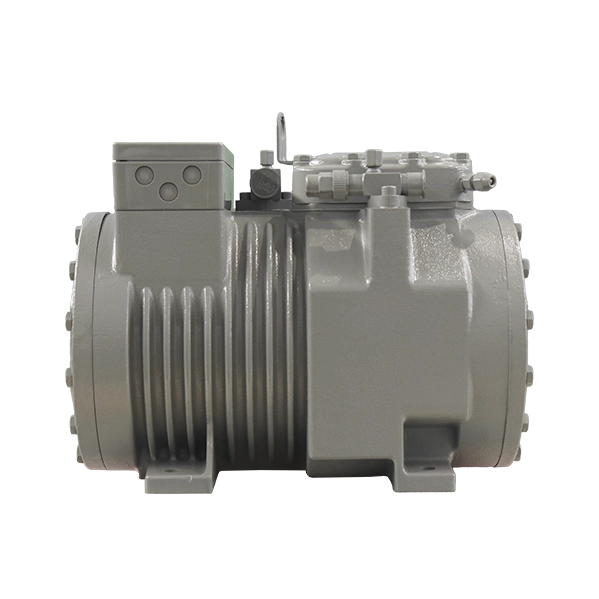
Fully welded units seal everything inside tightly. You cannot open them for internal repairs. If a minor internal valve breaks, you discard the whole unit. Bolted cast-iron housings solve this frustrating problem entirely. Technicians simply unbolt the casing directly on site. They can easily swap out valve plates, pistons, and stators. Imagine a valve plate fails late at night. With a welded unit, you wait days for a replacement delivery. You risk losing all stored inventory. With a bolted unit, a technician opens the head, drops in a new plate, and restarts the system. This saves days of crippling downtime.
Extreme continuous loads generate massive internal electrical heat. The equipment routes cold returning suction gas directly over the motor windings. This cools the stators constantly during operation. It prevents electrical burnout during heavy duty cycles. It makes the system an exceptionally reliable cold room compressor. Proper airflow around the internal coils is paramount here. The design actively uses the system's own refrigerant loop to protect the electrical core.
Standard scroll designs often struggle at high compression ratios. Their internal leakage rates increase when pressures peak sharply. Reciprocating pistons maintain extremely tight mechanical clearances. They trap and compress low-density gas much more effectively. The distinct piston action forces gas out efficiently through sturdy reed valves. This ensures consistent cooling power when evaporating temperatures plunge.
Thermal breakdown happens when discharge temps exceed safe limits. High pressure ratios generate excess thermal energy quickly. Demand cooling systems inject saturated liquid refrigerant directly into the suction cavity. Sometimes they target the mid-compression cycle instead. A temperature sensor monitors the discharge line closely. When heat spikes dangerously, a controller pulses a solenoid valve. It sprays a fine mist of liquid refrigerant inside. This rapid evaporation absorbs massive amounts of heat instantly. It drops discharge temperatures well below the oil-breakdown threshold. It protects the cylinder heads from warping under stress.
Low-temp suction gas lacks typical density. Thin gas absorbs far less motor heat than dense gas. Internal gas cooling alone is often insufficient. External fans mounted directly on the cylinder heads become non-negotiable. They blast ambient air across specific cooling fins cast into the metal. This localized airflow dissipates concentrated thermal pockets efficiently. It prevents localized metallurgical fatigue around the hot discharge ports. It extends system longevity significantly. Never run a deep-freeze application without these external fans.
Facilities experience fluctuating thermal loads daily. Forklifts enter and exit. Doors open and close frequently. You must scale cooling output dynamically to match these shifts. Mechanical cylinder unloading steps capacity down in fixed increments. It deactivates specific pistons mechanically to reduce refrigerant flow. Variable Frequency Drives (VFDs) modulate motor speed smoothly. VFDs match the exact load requirement in real time. They reduce excessive on-off cycling. This lowers energy consumption and reduces mechanical wear.
Feature | Variable Frequency Drive (VFD) | Mechanical Cylinder Unloaders |
|---|---|---|
Capacity Modulation | Smooth, continuous scaling (e.g., 30% to 100%) | Stepped, fixed increments (e.g., 50%, 100%) |
Energy Efficiency | High efficiency at partial thermal loads | Moderate efficiency at partial thermal loads |
Mechanical Wear | Low (reduces hard electrical starts and stops) | Moderate (requires mechanical valve actuation) |
System Complexity | Requires electronic inverter integration | Built directly into the cylinder head mechanics |
High-Global Warming Potential (GWP) gases face aggressive global phase-downs. Old favorites like R-404A are disappearing fast from the market. Environmental regulations force facility operators to adapt quickly. You must plan for compliance ahead of strict regional deadlines. Ignoring these trends leads to massive future sourcing costs.
You cannot blindly retrofit old equipment. A modern installation requires careful component matching. You need a model explicitly rated for low-GWP alternatives. Look for strict compatibility with R-448A, R-449A, or subcritical CO2 stages. Older seals and valves degrade rapidly when exposed to modern chemical blends. They swell or shrink unpredictably, causing severe leaks. Always verify factory ratings before purchasing new equipment.
Synthetic refrigerants demand specific high-grade lubricants. Polyolester (POE) oils are mandatory for these modern chemical blends. POE maintains crucial viscosity at extreme sub-zero temperatures. It guarantees proper oil return from the cold evaporator back to the warm crankcase. Using incorrect oil leads to sluggish return. The oil pools in the piping instead. It starves internal bearings and quickly destroys the crankshaft.
To ensure proper future-proofing, follow these critical compliance steps:
Audit your existing refrigerant inventory and mapped phase-out schedules.
Verify equipment model ratings for specific low-GWP chemical blends.
Confirm POE oil compatibility with your newly selected modern gas.
Update all internal system seals to prevent unexpected chemical degradation.
Pistons move violently during operation. This reciprocating motion generates inherent mechanical pulsation. These acoustic pulses travel straight down the rigid discharge line. Unchecked vibrations cause severe pipe fatigue over time. They lead to sudden and dangerous refrigerant ruptures. You must install proper vibration eliminators near the discharge port. Discharge mufflers absorb acoustic pulses. They neutralize physical shockwaves before they damage the wider piping network. Always mount eliminators parallel to the crankshaft.
Deep-freeze setups often involve lengthy piping routes. Low mass flow reduces the velocity of the returning gas. Slow gas struggles to push heavy oil up vertical risers. Oil gets trapped in the distant evaporator coils. You must size oil separators correctly at the discharge line. Precision piping traps are vital for assisting vertical oil lift. Proper slopes ensure gravity aids the return journey back to the sump.
Pay close attention to these best practices when routing your system:
Install P-traps at the base of every vertical suction riser to collect oil.
Pitch horizontal suction lines slightly downward toward the equipment sump.
Mount discharge mufflers as close to the vibration source as physically possible.
Size the oil separator specifically for low-temperature mass flow rates, not standard flow.
Semi-hermetic designs stand out for continuous heavy-duty cycles. Their high-lift capability handles extreme pressure gaps effortlessly. In-place repairability makes them ideal for commercial freezers, blast chillers, and large-scale cold storage. They deliver unmatched durability where light commercial units fail. You gain reliable performance across decades of operation.
Take proactive measures before final procurement. Audit your exact cooling capacity requirements in kW or BTU. Verify the absolute lowest target evaporating temperature your stored product demands. Consult original equipment manufacturers regarding specific liquid injection necessities. Plan your piping layout carefully. Incorporate robust oil management tools from day one to guarantee system longevity.
A: No. Using a medium-temp compressor for low-temp applications will result in thermal overload due to high compression ratios and insufficient motor cooling.
A: It mitigates extreme discharge temperatures caused by high pressure ratios, preventing the compressor oil from carbonizing and losing its lubricating properties.
A: Semi-hermetic units require periodic maintenance (oil checks, valve plate inspections) but can be rebuilt in place. Hermetic scrolls are maintenance-free internally but must be completely replaced if a mechanical failure occurs.


